
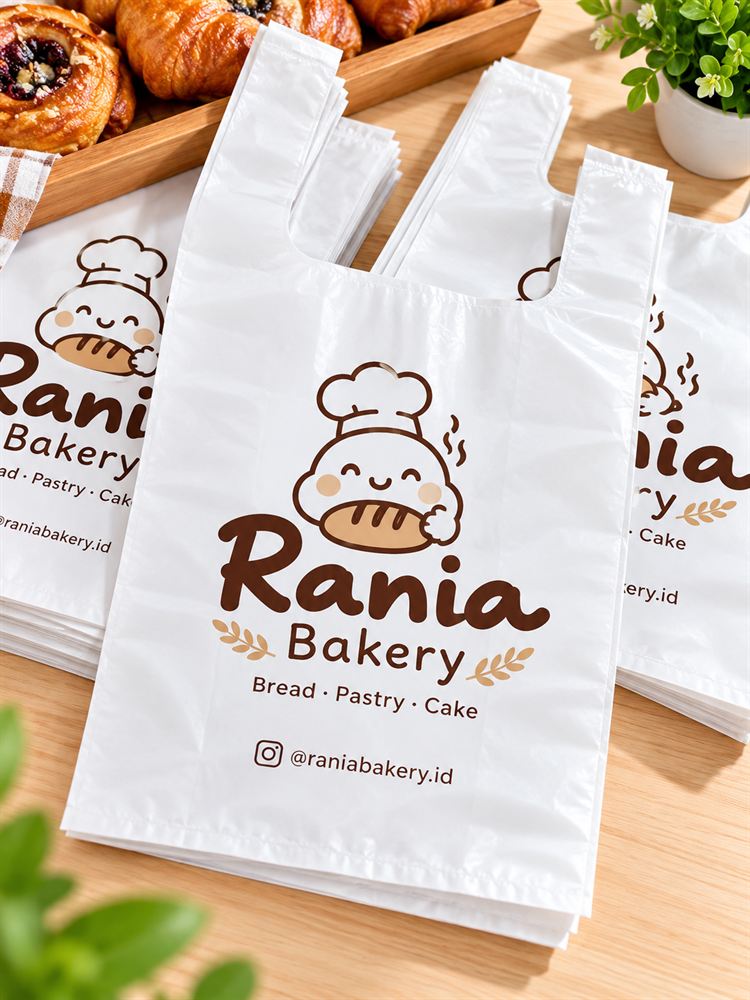
Getting to know HDPE and LDPE
HDPE (high-density polyethylene) and LDPE (low-density polyethylene) both belong to the polyethylene (PE) family, one of the most common types of plastic used for bags and packaging. The main difference lies in the density and structure of their molecules.
In HDPE, the molecular chains are fairly straight and tightly packed, so the plastic is denser. The result is a film that is strong even when thin, fairly stiff and slightly opaque. In LDPE, the chains have more branches and cannot pack as tightly. The result is a plastic that is softer, more flexible and clearer.
Because the base material is similar, both can be made into bags of many sizes, plain or printed with your logo. So the real question is not which one is better, but which character best suits your product and the way your customers use the bag.
How they look and feel
The easiest way to tell HDPE and LDPE apart is to look at them and hold them.
- HDPE usually looks slightly opaque, feels stiff and makes a crinkly, rustling sound when scrunched. Creases tend to stay visible. This is the feel of the typical T-shirt bag at shops, markets and minimarkets.
- LDPE feels softer and more pliable, is quieter when scrunched, and is moderately clear, so the contents can still be seen from the outside.
You can also feel the difference when you pull the bag. For the same thickness, HDPE generally resists pulling better, but once it has been punctured by something sharp, a tear usually spreads more easily. LDPE tends to stretch before it tears, which makes it more forgiving with irregularly shaped contents.
Tip: compare the bag you use today with a sample from the manufacturer. Scrunch it, pull it gently, then fill it with your own product. This simple test often tells you more than a specification sheet.
Warm or cold contents?
The temperature of the contents is one of the most important factors when choosing a material.
- HDPE is good for warm contents. HDPE is generally more heat-resistant than LDPE, so it is often chosen for food that is still warm. Aneka Plastik also makes heat-resistant HDPE bags for this purpose.
- LDPE is good for cold use. LDPE stays flexible at low temperatures, which makes it suitable for ice bags and products kept cold.
For frozen products that need stronger packaging or vacuum packs, also take a look at flexible packaging.
Please note: for very hot food, or food in direct contact with the bag, don't rely on the material name alone. Tell our team what kind of food it is and roughly how hot it will be, so the bag specification can be matched to it.
HDPE vs LDPE comparison table
Here is a summary of both materials to help you compare.
| Aspect | HDPE | LDPE |
|---|---|---|
| Full name | High-density polyethylene | Low-density polyethylene |
| Appearance | Slightly opaque | Moderately clear |
| Feel | Strong, fairly stiff, rustles when scrunched | Soft, pliable and flexible |
| When pulled | Resists pulling well; a tear spreads easily once punctured | Tends to stretch before tearing |
| Temperature | Good for warm contents | Good for cold use |
| Example products | T-shirt bags, shopping bags, bread bags, laundry bags, heat-resistant bags | Shopping bags, packaging bags, ice bags, zip-lock bags, spare part bags, aprons, rice bags |
| Printing | Screen printing or rotogravure | Screen printing or rotogravure |
Need something clearer? PP is generally clear, stiff and neat, while OPP is crystal clear, light and glossy. Both work well when your product needs to stand out, such as clothing, accessories or bread.
Choosing by type of business
As a starting point, these are common choices for different types of business:
- Shops, minimarkets and supermarkets. HDPE T-shirt bags and shopping bags are strong enough for everyday shopping and economical for daily use. See also our retail solutions.
- Boutiques, fashion and gift shops. LDPE shopping bags feel soft and supple in the hand. HDPE shopping bags remain an option if strength is your priority.
- Bakeries and food. Both are used for bread bags. HDPE suits contents that are still warm, while the clearer LDPE helps your products show. See packaging for bakeries.
- Laundries. Both are used: strong, economical HDPE laundry bags, or softer, more flexible LDPE laundry bags. See packaging for laundries.
- Ice, rice and staples. LDPE is used for ice bags, rice bags and packaging for staple goods.
- Spare parts and industry. Flexible LDPE suits spare part bags and resealable zip-lock bags.
If your product isn't on the list, answer these three questions:
- How heavy are the contents, and do they have corners or sharp edges?
- Are they warm, at room temperature or cold?
- How important is it that the contents can be seen from the outside?
Heavy, warm contents tend to point towards HDPE. Cold or irregularly shaped contents, or products that need to be seen, tend to point towards LDPE. Your answers also help our team suggest the right bag size and thickness.
Consider cost as well. HDPE is often the economical choice because it stays strong even when thin, so each bag can use less material. LDPE is usually made slightly thicker for comparable strength, but it gives your customers a softer feel in the hand.
Both can carry your logo
Both HDPE and LDPE can be printed by manual screen printing or by rotogravure. Screen printing suits flexible order quantities and simple designs. Rotogravure delivers sharp, consistent results for multi-colour designs and large volumes.
The printed result can look slightly different on each material. On slightly opaque HDPE, the design sits on a more solid background. On clearer LDPE, the colour of the film and the contents of the bag also affect how the design looks. That is why film colour and ink colours are best discussed together at the design and sample stage.
Read the full comparison in our screen printing vs rotogravure guide, or go straight to our printing services. Bag size, concept, design and finishing can all be customised to your brand.
Summary
Choose HDPE if you need a strong, fairly stiff and economical bag, especially for shopping or warm contents. Choose LDPE if you need a soft, flexible, clearer plastic that works well for cold use. Still unsure? Send us a photo of your product and our team will suggest an option.