How screen printing works
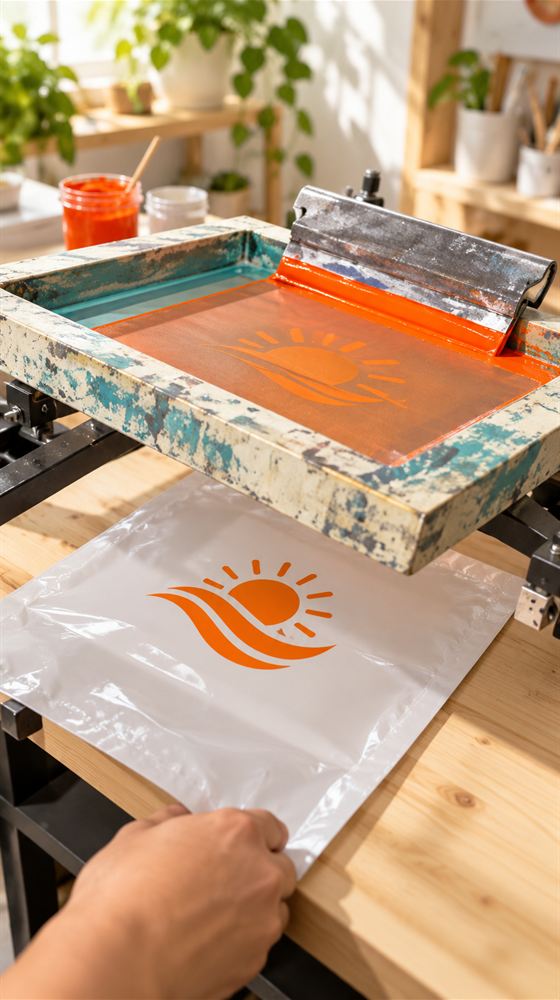
Screen printing (sablon in Indonesian) is a manual printing method. The design is transferred onto a screen: a fine mesh stretched over a frame. The areas of the screen outside the design are blocked, so ink can only pass through where the artwork is.
To print, the bag is placed under the screen and ink is drawn across it with a squeegee, pushing it through the mesh onto the plastic. This is repeated for every bag.
- One screen per colour. A two-colour design means two screens and two print passes, usually with drying time in between.
- Printed on finished bags. The bags are made first, then screen printed one by one.
- Relatively simple set-up. That makes screen printing flexible for a range of order quantities, especially for simple designs.
How rotogravure works
Rotogravure is a machine printing method. The design is engraved onto metal cylinders, one cylinder per colour. The cylinder surface has tiny cells that hold the ink. As the press runs, ink from these cells transfers onto the plastic film.
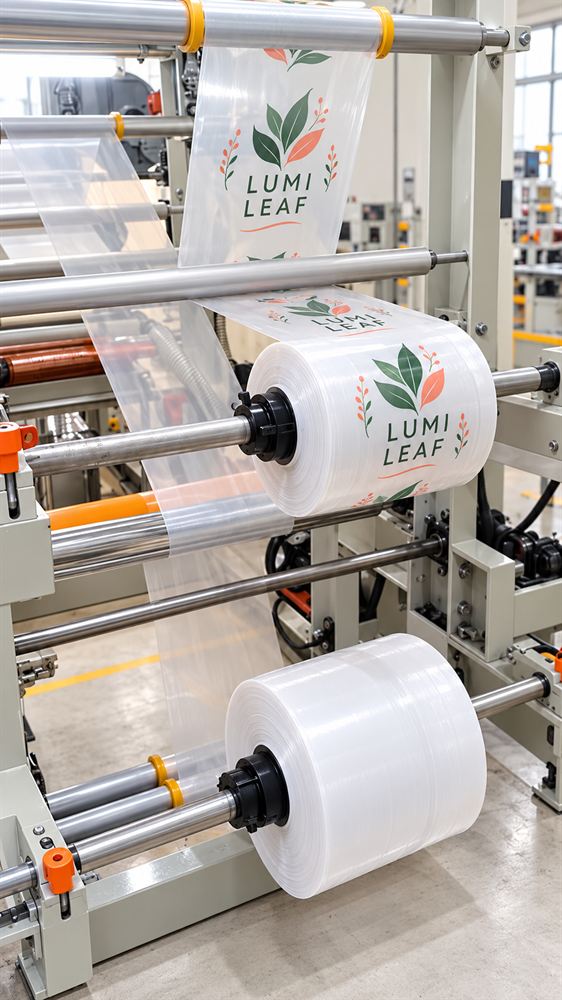
Unlike screen printing, rotogravure prints on a roll of plastic film before the bags are made. The film runs past one cylinder after another, so all colours are printed in a single continuous run. Only then is the printed film cut and formed into bags or packaging.
- Cylinders are made up front. Each design needs its own cylinders. As long as the design doesn't change, the cylinders can generally be reused for repeat orders. Ask our team about the details.
- Sharp, consistent results. Fine details, gradients and multi-colour designs print cleanly, with the same colours from bag to bag.
- Efficient at high volumes. Because of the cylinder preparation, rotogravure is most cost-effective for large orders.
Strengths and limitations of each
Screen printing
- More flexible order quantities.
- Suits logos, business names or simple text in a few colours.
- Easier to change designs, for example for promotions or events.
- Limitations: very fine detail and colour gradients are hard to achieve, each extra colour adds a print pass, and because it is done by hand, results can vary slightly from bag to bag.
Rotogravure
- Sharp results for fine detail, gradients and multiple colours.
- Consistent colour from bag to bag and from one production run to the next.
- Suits patterned designs or artwork that covers the whole bag.
- Limitations: cylinders must be prepared first, design changes require new cylinders, and it is less economical for small quantities.
Screen printing vs rotogravure at a glance
| Aspect | Screen printing | Rotogravure |
|---|---|---|
| Method | Manual, with a screen and squeegee | Machine, with engraved cylinders |
| Printed on | Finished bags | A film roll, before the bags are made |
| Order quantity | Flexible | Large volumes |
| Colours | A few colours, simple designs | Multi-colour |
| Detail & gradients | Limited | Sharp and fine |
| Consistency | May vary slightly | Highly consistent |
| Design changes | Relatively easy | New cylinders needed |
| Initial set-up | A screen for each colour | A cylinder for each colour |
Both methods can be used for HDPE and LDPE bags. Not sure about the material yet? Read our HDPE vs LDPE guide first.
When to choose which?
Choose screen printing if:
- your order quantity is small to medium, or not yet certain;
- your design is a logo, business name or text in one or a few colours;
- you want to try branded bags first, or you change designs often.
Choose rotogravure if:
- you need bags in large volumes on a regular basis;
- your design is detailed, multi-colour, uses gradients or covers the whole bag;
- consistent brand colours really matter, for example across a chain of shops or for product packaging on the shelf.
To picture it: a newly opened coffee shop that needs bags with a one-colour logo is usually better suited to screen printing. A chain of shops that regularly orders full-colour patterned bags will benefit more from rotogravure, because the colours stay uniform across every branch.
You can also start with screen printing while volumes are small, then consider rotogravure once demand is steady and the design is final. Not sure? Our team can compare both options for your design and quantity. See also our printing services.
Preparing artwork for the best print
Whichever method you choose, clean artwork speeds things up and reduces revisions. Think about what to print besides your logo, too, such as your shop name, WhatsApp number, social media handle or address, so every bag works as advertising.
Artwork tips:
- Send your logo as a vector file, such as AI, CDR, EPS, PDF or SVG, so lines stay sharp when enlarged.
- Include a colour reference, such as a Pantone code or an existing printed sample, because colours on screen can differ from print.
- Decide on the number of colours and the print position: one side or both sides.
- Avoid very small text and thin lines, especially for screen printing.
- Consider the bag colour: the same design can look different on white, clear or coloured film.
You can send your design files via WhatsApp, for example after filling in the quote form.
No vector file? Just tell us what you need. Ordering from Aneka Plastik takes four steps:
- Consultation on material, size, design and printing method.
- Design & sample, confirmed with you before production starts.
- Production, generally 2–4 weeks depending on quantity and specification.
- Delivery to your location, free within Greater Jakarta (Jabodetabek).
The print area also depends on the bag size, so use our guide on how to choose plastic bag size & thickness to get it right.
Summary
Choose screen printing for flexible order quantities and simple designs in a few colours. Choose rotogravure for large volumes, detailed multi-colour designs and consistent colour on every run. Prepare a vector logo and a colour reference to keep things moving.